
Commercial and Rental Property Restoration
Damage in a rental building or a small commercial space involves more people than damage in a house. The owner authorizes the work, tenants live or work in the rooms affected, and a business may lose trade for every day it stays closed. Corryville Restoration works on rental buildings and small commercial spaces in Cincinnati, from water extraction and structural drying to soot removal, odor control and board-up after storms.
Owners, Tenants and Property Managers
In a rental building the first questions are about people rather than materials: who can authorize the work, who holds the keys to the units involved, and how tenants will be told what is going to happen in their homes. Settling those points at the start keeps the drying from stalling at a locked door.
Tenants’ belongings are a separate matter from the building. Furniture, rugs and electronics in a unit belong to the tenant, and moving or discarding them needs the tenant’s agreement, while drywall, flooring and fixtures belong to the owner. Drying equipment in an occupied unit also runs on that unit’s electricity, a detail worth agreeing between owner and tenant before the equipment is set up.
Who should be there when the damage is first looked at?
Someone who can authorize the work and open the affected units, usually the owner or a property manager, and the tenant of each unit involved when possible. A tenant can often say when the leak started and what has changed since, which helps trace the source.
Can tenants stay in their units during the drying?
Often they can, when the water was clean and the wet area can be closed off. Sewage, heavy mold growth and smoke spread through a unit are different: the rooms involved should not be occupied until they have been cleaned.
Does a leak in an upper unit always reach the unit below?
Not always visibly, but water that soaks a floor usually finds its way into the ceiling and walls underneath. When a leak starts upstairs, it is sensible to look at the unit below before treating the damage as confined to one apartment.
Leaks That Spread Between Units
Water in a multi-unit building follows the structure, not the floor plan. Kitchens and bathrooms are often stacked one above another, so a failed supply line or an overflowing tub on an upper floor appears in the ceiling of the unit below, and sometimes in the one below that. Shared hallways and stairwells carry pipes, ducts and gas lines in their ceilings, and opening a hallway ceiling is often the only way to reach a leak without disturbing the units on either side.
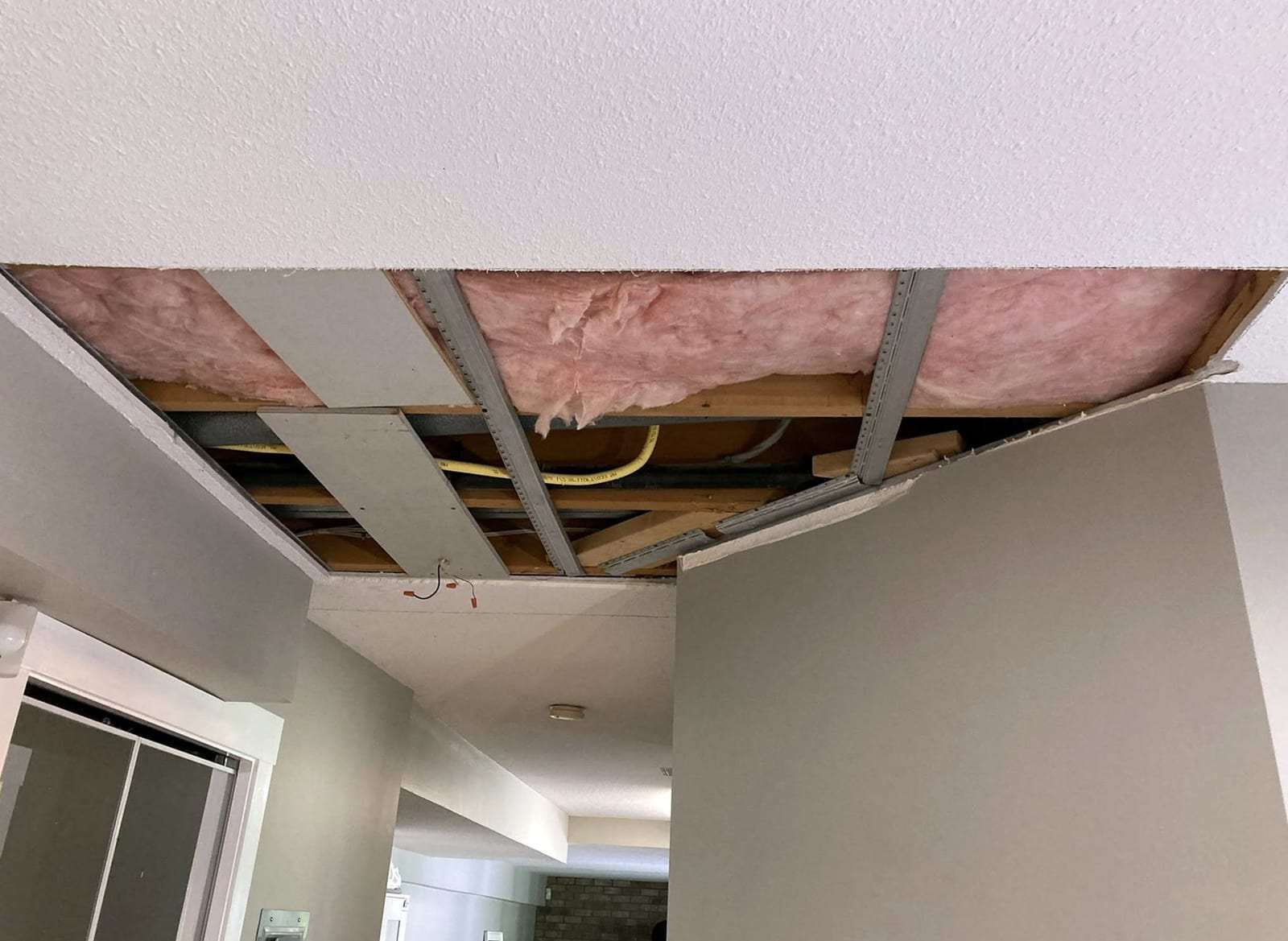
Older brick buildings with a shop at street level and apartments above, common along Cincinnati’s neighborhood business streets, put a business directly under someone’s kitchen or bathroom. A leak upstairs then becomes two jobs at once: drying the apartment and getting the shop beneath it open again.
Keeping a Business Open or Reopening It
A small commercial space can sometimes stay open while one part of it dries. The affected area is closed off with plastic sheeting, walkways are kept clear of hoses and cords, and the loudest equipment is placed away from where customers and staff spend the day. Where that is not safe, as with sewage, mold or soot spread through the space, the aim becomes the quickest safe reopening instead.
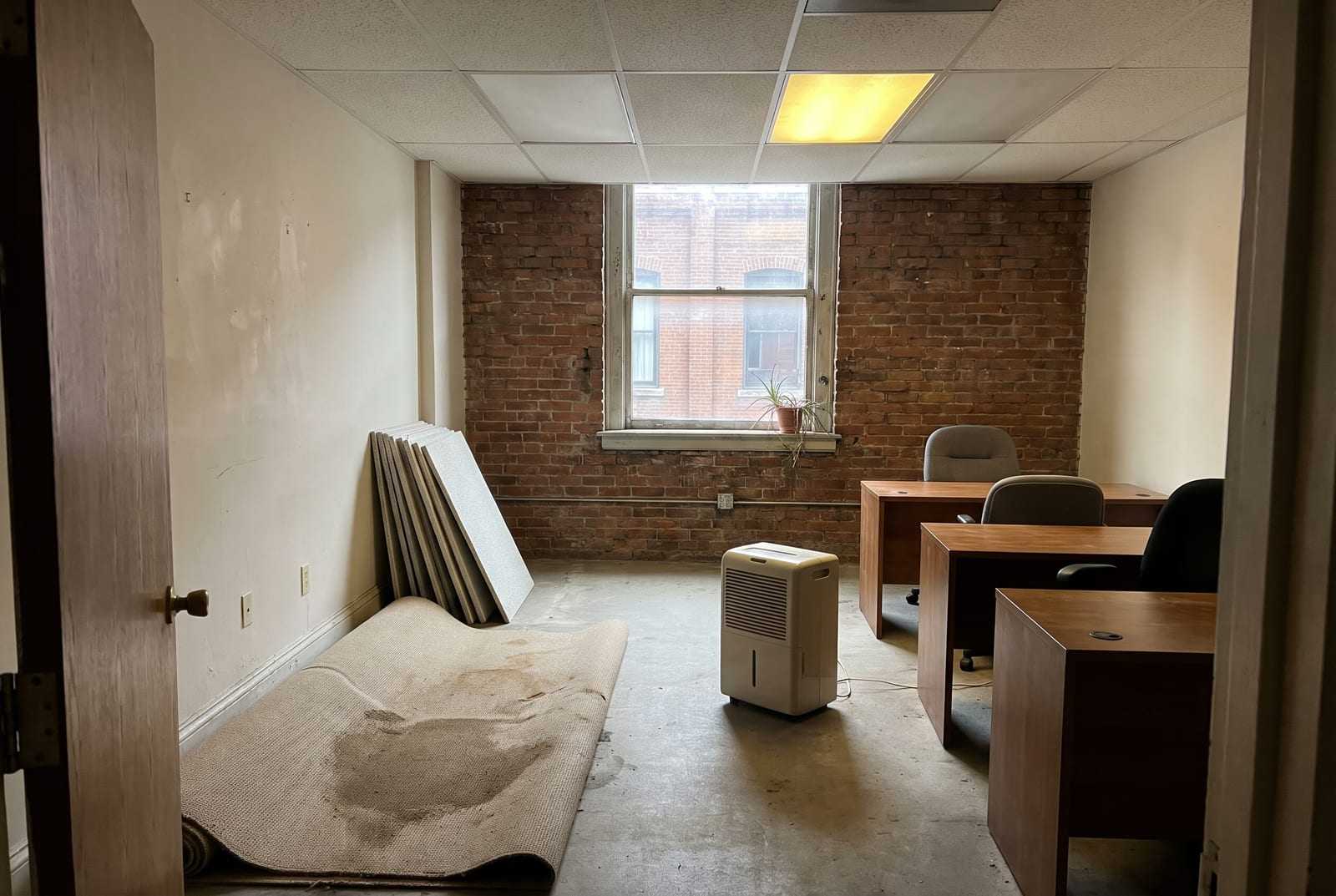
Commercial interiors bring their own materials. Drop ceilings with lay-in tiles show a leak quickly, and stained or sagging tiles are simply replaced. Carpet tiles can be lifted a few at a time, while glued-down carpet often has to come up in larger sections so the slab beneath can dry. Electrical equipment that has been wet should stay off until an electrician has checked it.
Records of What Was Opened, Removed and Dried
Restoration work in rental and commercial property usually leaves a written record. Photographs taken before, during and after the work, moisture readings noted at each check, and a list of the materials removed and replaced are usual practice in the trade.
For an owner, such records show tenants what was done in their units, answer questions when the building is sold or refinanced, and make it easier to tell a new leak from an old one years later. It is worth agreeing at the start what will be recorded and in what form, so the owner, the property manager and the tenants all work from the same account of the job.
Drying, Cleanup and Repairs in Rental Buildings
The work that applies to a rental or commercial building is the same work done in a house, arranged around more people:
- Water extraction and structural drying after supply-line failures, roof leaks and backed-up drains, the center of water damage restoration.
- Fire and smoke cleanup, with soot removal and odor control, after a kitchen fire in one unit or a fire next door, through fire and smoke damage restoration.
- Mold remediation where moisture has sat too long, which a moisture inspection of a vacant unit or a basement storage room can find before tenants notice it.
- Repairs to drywall, ceilings, flooring and trim once the structure is dry, through repair work.
Broken Storefront Glass and Open Roofs After a Storm
A storm that breaks a storefront window or opens part of a roof leaves a building exposed to rain and to anyone passing by. Board-up after storms covers broken windows and doors with plywood cut to fit and fastens tarps over roof openings, so the building is closed to weather and entry until the glass and roofing can be replaced. Summer thunderstorms bring down limbs and drive rain sideways, and a broken window boarded promptly keeps one failure from turning into a soaked floor and ceiling.
Scheduling Work in a Rental or Commercial Building
For a rental building or a small commercial space, book an appointment and mention the units or the business affected, or call to discuss access and timing first.