
Maintenance and Inspections for Hidden Damage
Water Damage That Starts Out of Sight
Much of the water damage that grows into a large job starts small and out of sight: a drip at a drain connection inside a vanity, a pinhole leak in a supply line behind a wall, a flashing gap that lets rain into the attic only when the wind blows from one direction. By the time a stain or a soft spot appears, the water has often been at work for weeks. An inspection looks for that moisture before it shows, and for the mold and rot that follow it.
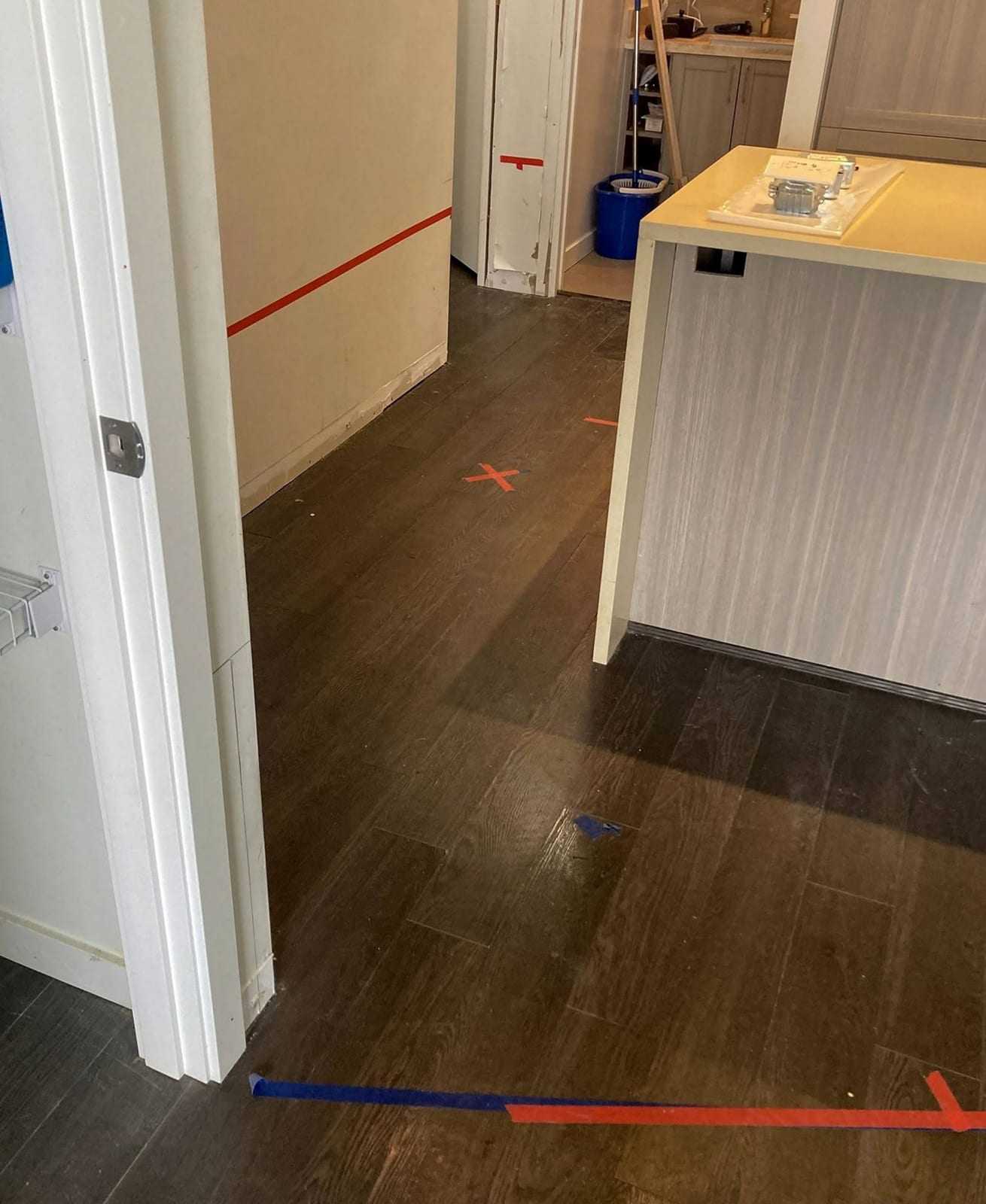
Moisture mapping is the core of the work: readings taken across walls, floors and ceilings are compared with a dry area of the same material, and the edge of the wet area is marked, often with tape on the floor or the wall, so that the drying and the repairs can be planned around it.
| Inspection type | What is checked | Good time to book |
|---|---|---|
| Moisture mapping | Walls, floors and ceilings around a leak, the rooms beside and below it, and the framing behind baseboards and under cabinets | After any leak, even one that looks dry; before new drywall or flooring goes over an area that was wet |
| Attic and roof-leak check | Roof sheathing, rafters and insulation for stains and damp spots; flashing at chimneys, vents and skylights; bathroom fans that vent into the attic | When a stain appears on a top-floor ceiling; as snow and ice melt off the roof in late winter; after high winds |
| Basement and crawl space check | Foundation walls for water lines and white mineral deposits, the sump pit and pump, floor drains, crawl space vapor barriers, joists and sill plates | After heavy spring rains; when the basement smells musty; before finishing a basement |
| Mold inspection | Visible growth, musty odors, the back of drywall and the cabinet floors under sinks near past leaks, humidity levels, and the moisture source feeding the growth | When a musty smell lingers; after a leak that stayed wet for days; when spots appear on walls, ceilings or stored belongings |
| Post-storm check | Roofing and flashing, gutters, windows and doors where rain was driven in, the ceilings and walls below, and basement walls after heavy runoff | After a storm with high winds or hail; after a limb strikes the house; when water came in at a window or a door |
Between inspections, a few routine checks around the house catch many of the leaks that would otherwise turn into hidden damage.
Seasonal Checks a Homeowner Can Make
- Autumn, once the leaves are down: clear the gutters and downspouts, and make sure each downspout empties well away from the foundation.
- Before the first hard freeze: disconnect garden hoses and shut off and drain the outdoor faucets, since freeze-thaw winters split pipes in unheated walls and crawl spaces.
- Spring, ahead of the heavy rains: test the sump pump by pouring a bucket of water into the pit and watching it switch on and empty the pit.
- Twice a year: check the washing machine hoses for bulges, cracks and rust at the fittings, and replace worn rubber hoses with braided steel ones.
- Twice a year: look at the base of the water heater for rust, drips or water in the pan, and check that the relief valve pipe is not dripping.
- After storms and before winter: check the caulk and seals around windows, and look from the ground for missing shingles, lifted flashing or cracked vent boots.
Moisture Meters, Thermal Cameras and Tape Lines
An inspection starts with what the owner has noticed: a smell, a stain, the sound of running water when nothing is turned on, a floor that feels soft. From there the check works outward from the suspected source in a widening pattern, into the rooms below and beside, the inside of closets and vanities, and the wall cavities behind the baseboards, until the readings return to the dry level for each material. Relative humidity and temperature are measured too, because a damp basement or a poorly vented bathroom can wet materials without any leak at all.
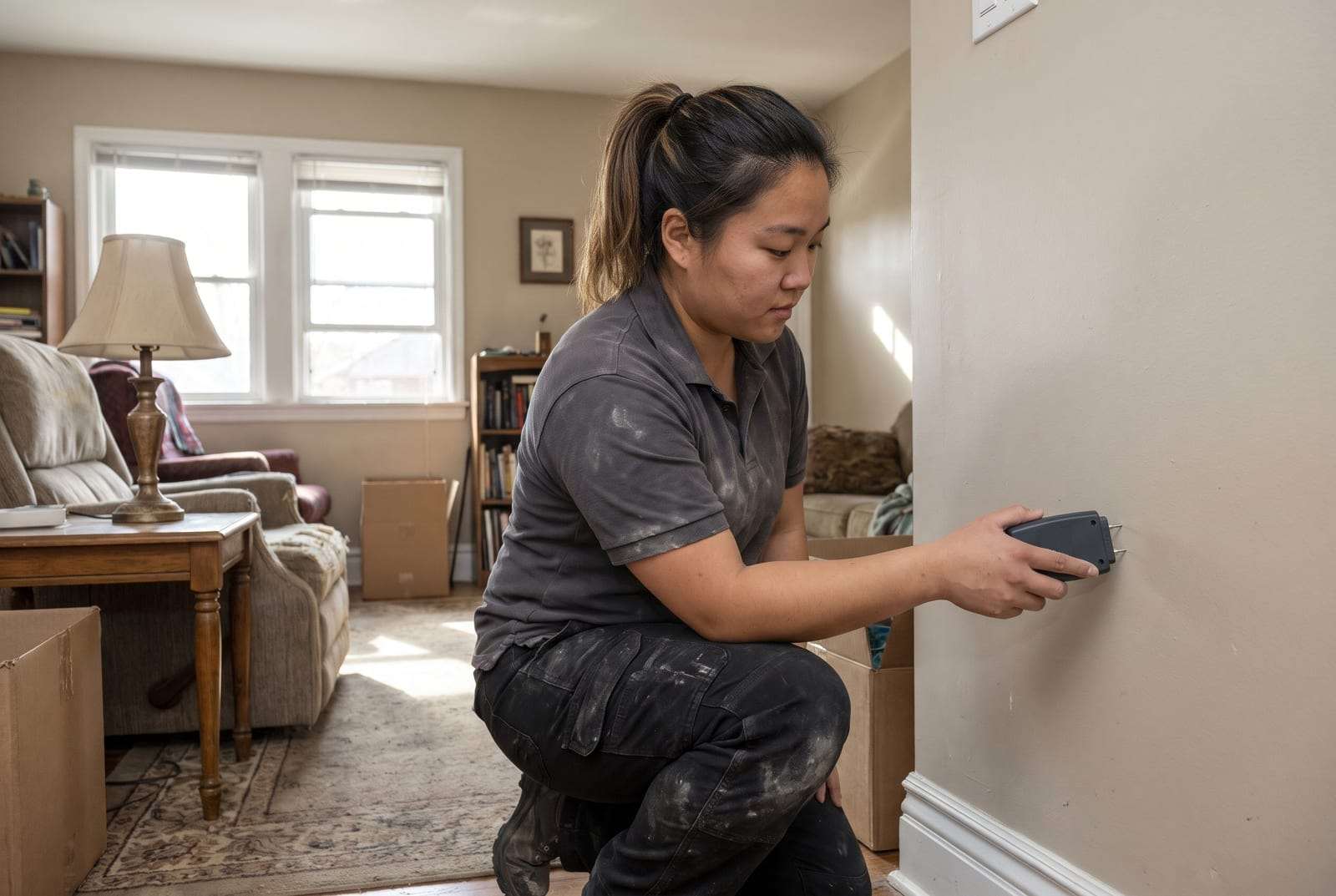
A thermal camera is a guide, not a verdict. It shows differences in surface temperature, so a cool patch on a ceiling may be water, a gap in the insulation or a draft, and only a meter reading tells them apart. Pin meters measure the moisture content of wood directly, which matters for subfloors, joists and sill plates, while pinless meters read through a surface without marking it, which suits finished walls and hardwood.
Mold Inspection Follows the Moisture
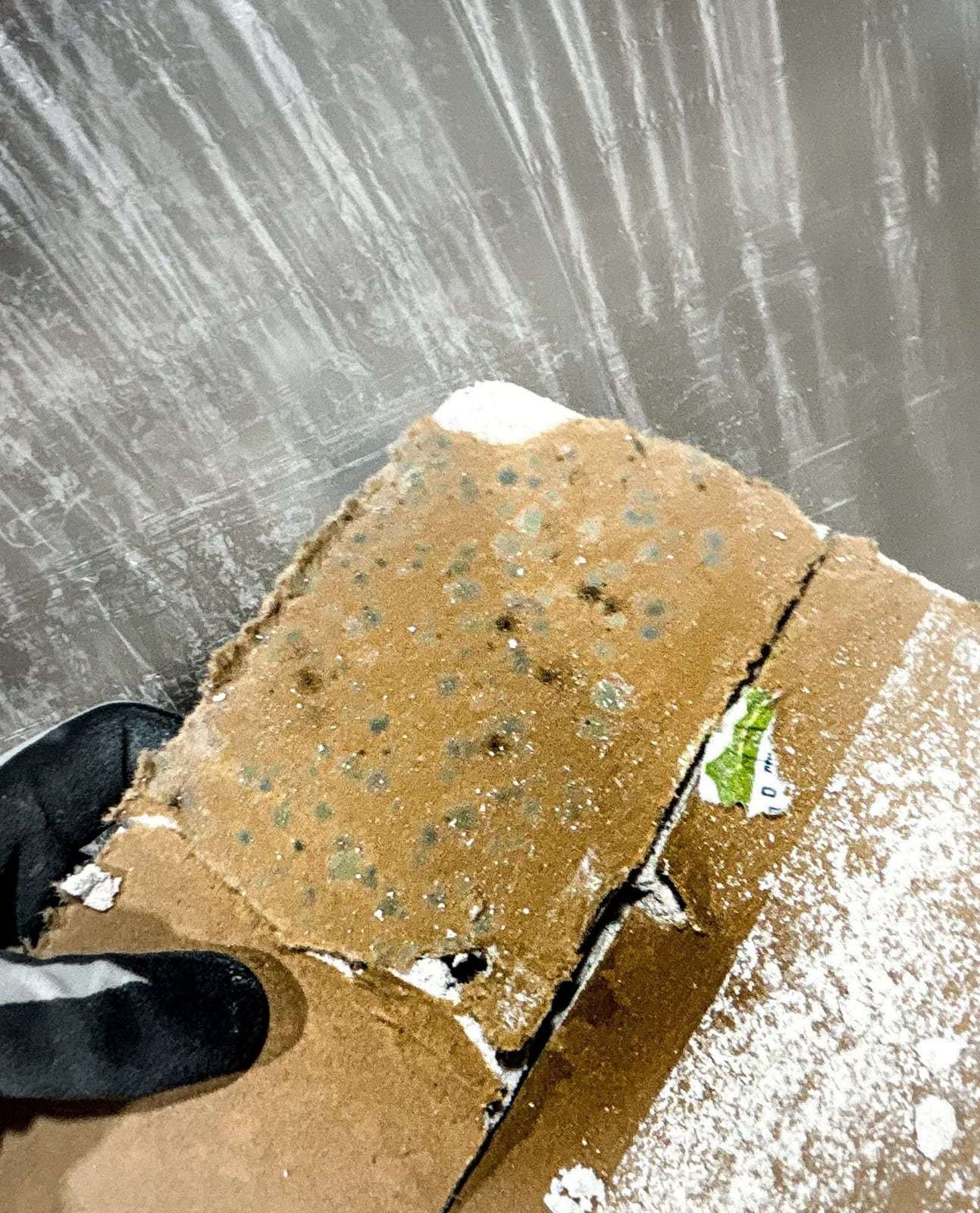
Mold usually grows where nobody looks: on the paper backing of drywall behind a slow leak, under carpet pad, on the underside of a subfloor near a toilet, on joists above a damp crawl space. A mold inspection finds it by following the moisture, combining readings, the pattern of stains and odors, and in some cases a small opening in a wall to look into the cavity.
Air or surface samples sent to a laboratory can identify what is growing, but when mold is visible, sampling seldom changes the work: the moisture is stopped, the growth is removed and the area is dried. That removal is the mold remediation carried out as part of the water damage work.
Attic, Basement and Post-Storm Checks
In the attic, the check covers stains and soft spots on the roof sheathing, nail tips that rust or drip in cold weather, and matted insulation below a leak. Bathroom and kitchen fans that vent into the attic instead of outdoors can cause winter condensation that looks like a roof leak.
In basements and crawl spaces, the check covers the foundation walls, the joists and the sump pump, and the air as well: the humid summers of the Ohio River valley leave condensation on cold water pipes and ductwork that can be mistaken for a leak.
After a storm, the check follows the path the water took: the roofing and flashing first, then the attic, the ceilings and walls below, and the windows and doors where wind drove the rain in. Where a building is still open to the weather, emergency board-up comes before any inspection.
Signs of Hidden Moisture in Walls, Floors and Ceilings
What does a musty smell mean when no water is visible?
A musty smell is the odor of mold and bacteria growing on damp material, so it usually means moisture somewhere out of sight: inside a wall, under a floor covering, in a crawl space, or in boxes stored against a damp basement wall. The smell travels, so the source is found with moisture readings rather than by following the odor alone.
Why does paint peel or bubble on a wall that looks dry?
Paint lifts when moisture pushes against it from behind. On an interior wall, that points to a leak in the cavity or a bathroom without enough ventilation; on a basement wall or an exterior masonry wall, it often means water moving through the brick or block. Scraping and repainting without finding the moisture brings the peeling back.
Does a ceiling stain that has dried still need to be checked?
Yes. A dry stain shows that water reached the ceiling at some point, but not whether the leak has stopped, whether the insulation above is still wet, or whether mold has started on the back of the drywall. A roof leak may only show during wind-driven rain, and a plumbing leak may only run when a fixture upstairs is in use, so a stain can look settled while its source is still active.
Why does a floor feel soft or uneven near a bathroom or kitchen?
A soft spot near a toilet, a tub or a dishwasher usually means the subfloor has been wet long enough to weaken, often from a slow leak at a wax ring, a supply line or a drain. Cupped hardwood, lifting vinyl seams and loose tiles are other signs of water under a floor. The moisture content of the subfloor is measured from above and, where possible, from the basement or crawl space below.
Arranging a Moisture or Mold Inspection
An inspection does the most good before the damage shows on the surface. Book an appointment to have a stain, a smell or a suspected leak checked and mapped.