
Installations and Replacements After Damage
Deciding Between Repair and Replacement
Replacement work covers the materials that come out after water, fire, smoke or mold damage and the new materials that go in their place: drywall, insulation, flooring, baseboard and trim, cabinets and doors. Whether a material is repaired or replaced is not a matter of preference. It depends on what the material is made of, what kind of water or damage reached it, and how long it stayed wet.
The trade sorts water into three categories. Clean water from a broken supply line or a leaking water heater is Category 1. Water from a washing machine, a dishwasher or a toilet overflow without waste is Category 2, which carries enough contamination to make porous materials harder to save. Sewage, and floodwater that came in from outside, is Category 3: it is treated as contaminated, and porous materials it reaches are removed rather than cleaned. Time moves water up that scale, and mold can begin to grow on damp drywall paper and wood within a day or two.
Porous materials such as drywall, insulation, carpet pad and particleboard hold water deep inside, where moving air reaches it slowly, and many of them lose strength as they soak. Dense materials such as solid wood, plaster and tile hold water mostly near the surface, can often be dried in place, and are then put right with repairs rather than replacement.
| Item | Replace when | Repair instead when |
|---|---|---|
| Drywall | Sewage or floodwater reached it, it stayed wet for more than a couple of days, or it is swollen, sagging, crumbling or spotted with mold | Clean water reached it briefly, the board stays firm and flat, and it dries in place; small damaged sections are cut out and patched |
| Plaster and lath | The plaster has come loose from the lath, sounds hollow, falls away or soaked up sewage | The plaster stays bonded to the lath; it is dried in place, and cracks and stains are repaired before repainting |
| Insulation | Fiberglass batts or cellulose were soaked, compressed or stained, which is the usual outcome after a real soaking | Rigid foam board or closed-cell foam got wet only on the surface and can be wiped down and dried |
| Flooring | Carpet pad was soaked, carpet met sewage, laminate swelled at the edges, or hardwood buckled off the subfloor | Carpet met clean water and dried quickly, or hardwood cupped but stayed fastened and flattens as it dries |
| Baseboard and trim | MDF or finger-jointed trim swelled or split, or sewage reached any of the trim | Solid wood trim can be pried off, dried and refinished; original trim in older houses is usually worth the effort |
| Cabinets | Particleboard or MDF boxes swelled, came apart in layers or soaked up contaminated water | Solid wood or plywood boxes stayed sound; the toe kick is removed so the space underneath can dry |
| Doors | A hollow-core door swelled at the bottom or its skins separated, or any door warped beyond adjustment | A solid wood door stayed true; it is dried slowly, then trimmed, sanded and refinished as needed |
Repair or Replace Helper
Choose the material, the type of damage and how long it stayed wet, then press Show the Likely Answer.
Tear-Out, Drying and New Materials
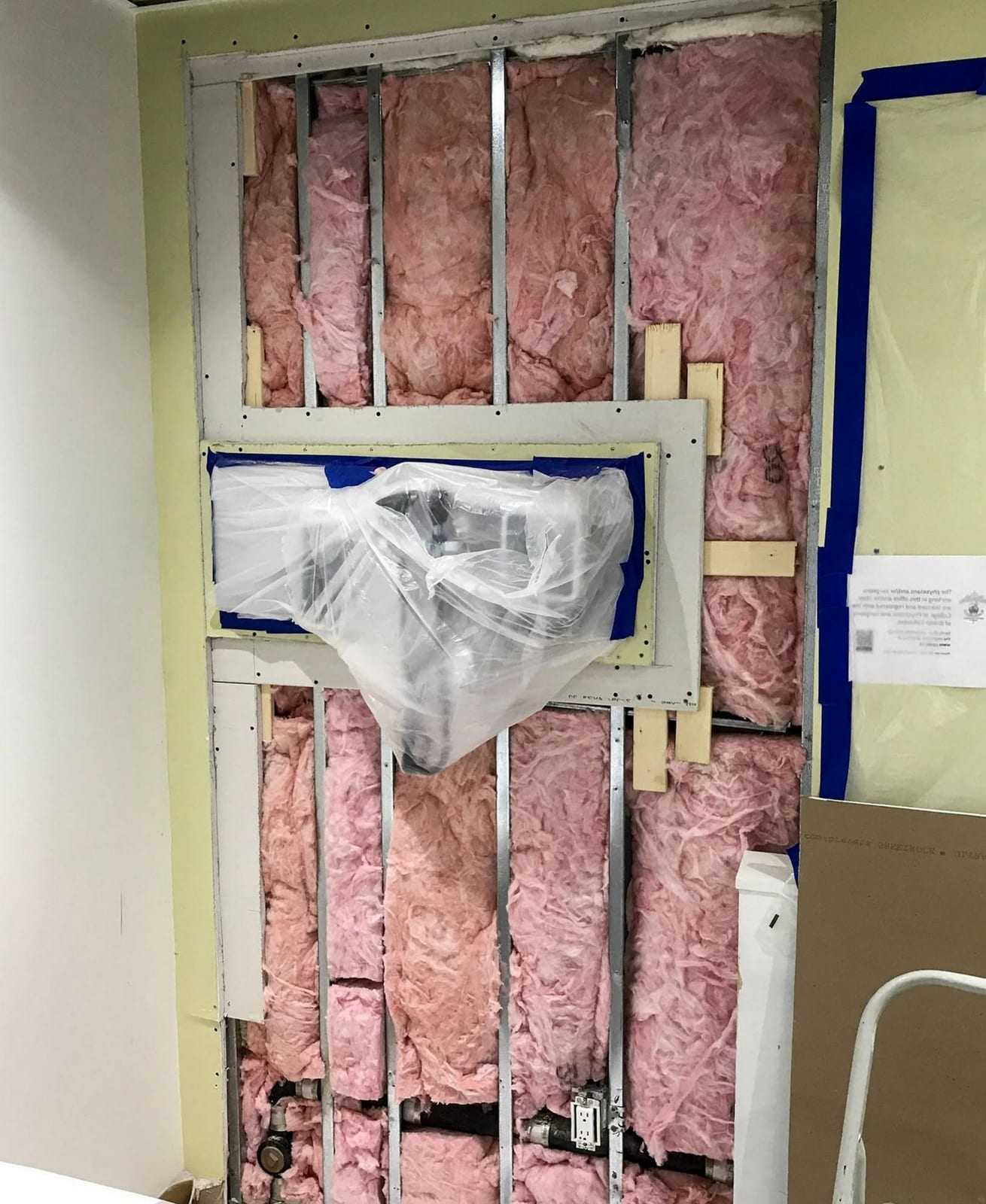
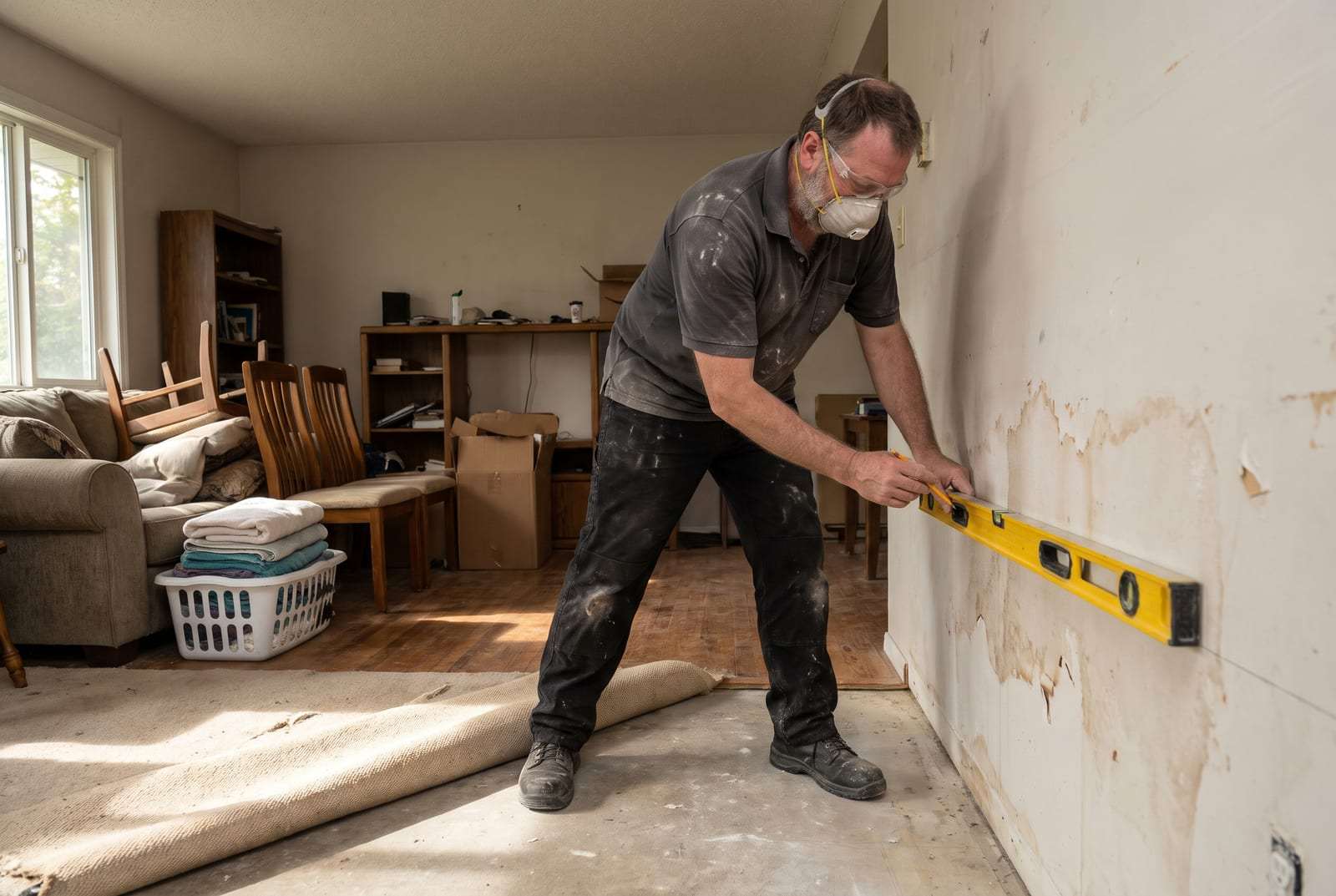
Replacement work follows a fixed order, because new materials closed over a wet structure trap the problem inside. The area is protected first, with plastic sheeting over doorways and built-ins and covering on the floors along the way in and out. Damaged materials then come out: baseboard is pried off, wet carpet pad is cut and rolled up, and drywall is cut along a straight, level line above the highest wet point, a step the trade calls a flood cut. The line is usually set at a height that suits standard sheets, often two or four feet, so the new pieces fit cleanly and the patch is simpler to finish than the ragged edge of a stain.
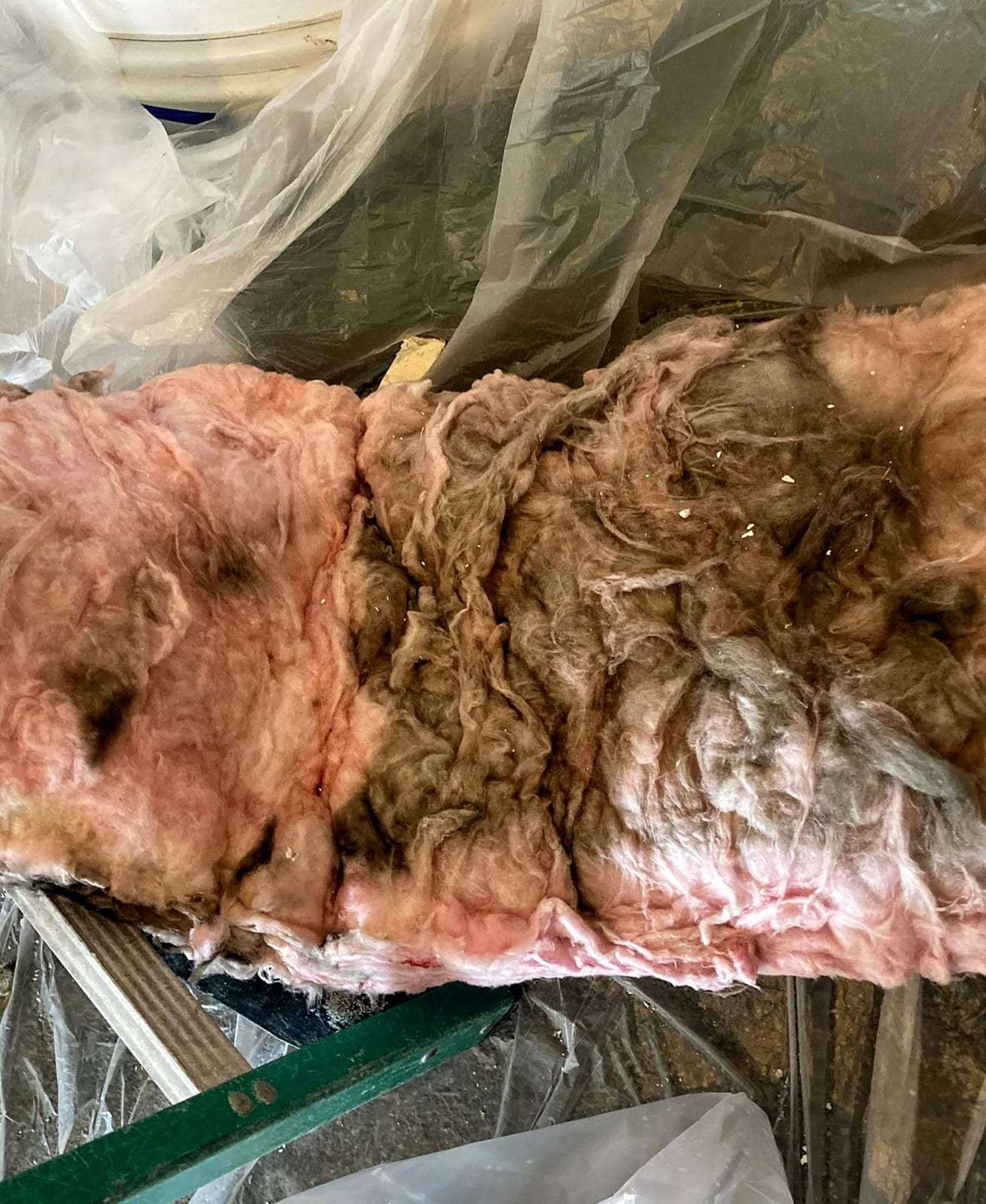
With the wall open, wet insulation is pulled out and bagged. Fiberglass batts that soaked up water sag in the cavity and hold moisture against the studs and the back of the sheathing, so they are not left to dry in place. The framing is then dried with air movers and dehumidifiers until moisture readings in the studs and plates are back to a normal level for wood, and framing that sewage or mold reached is cleaned and treated before anything covers it.
Closing a wall over damp framing is how mold returns months later behind fresh paint, which is why the trade does not shorten the drying stage to start the rebuild sooner.
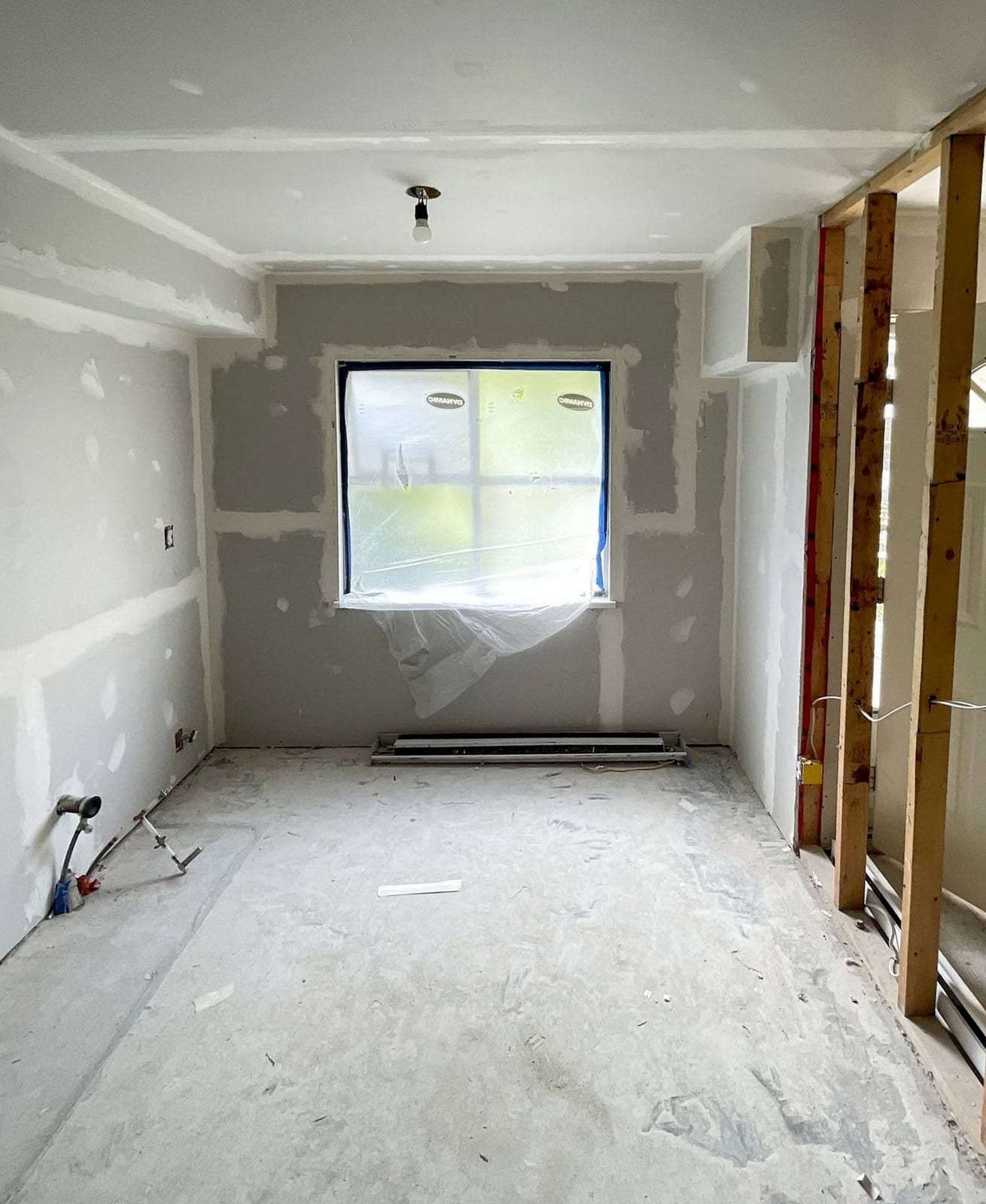
Installation then reverses the tear-out. New insulation goes into the dry cavities, drywall is hung, taped and finished in several coats, and the walls are primed and painted. Trim, doors and cabinets are reinstalled or replaced, and flooring goes down last, once the subfloor is dry and flat. Matching is part of the job: wall texture, trim profiles and paint sheen are matched to the surrounding rooms, and in older Cincinnati houses with plaster walls and wide original trim, the new work is blended into what remains.
Protection Installed During the Rebuild
A water loss often exposes a weak point that will fail again. While walls and floors are open, protection against the next leak can be installed:
- A sump pump for a basement that takes on water, or a new pump where the old one failed or could not keep up
- A battery backup for the sump pump, which keeps it running when a storm cuts the power
- A high-water alarm in the sump pit, which sounds before water reaches the basement floor
- Water leak sensors under sinks, behind the washing machine and beside the water heater, which sound an alarm or send a phone alert when they get wet
None of these prevents every loss, but each one shortens the time between a leak starting and someone noticing it, and that time decides how much has to be replaced.
Why Soaked Drywall and Insulation Are Often Replaced
Why is wet insulation replaced instead of dried?
Fiberglass batts insulate by trapping air, and once soaked they compress and seldom recover their shape. Cellulose mats down and holds water for a long time. Inside a closed wall, neither can be checked for dryness, so insulation that was truly soaked is replaced while the cavity is open.
Rigid foam board and closed-cell spray foam absorb far less water and can often stay once the surfaces around them are dry.
Can drywall that got wet be dried and kept?
Often, when clean water reached it for a short time and the board stays firm, flat and fastened. Air movers and dehumidifiers dry it in place, sometimes with small holes drilled behind the baseboard to move air through the cavity. Drywall that sagged, crumbled at the bottom edge, met sewage or floodwater, or stayed wet long enough to grow mold on its paper is cut out and replaced, because gypsum loses strength when soaked and the paper facing feeds mold.
Do hardwood floors have to be replaced after a leak?
Not always. Solid hardwood that cups after a leak often flattens again as it dries, with drying mats drawing the moisture out through the boards. The floor is then given time to settle before it is sanded and refinished, because sanding too early can leave the boards crowned once they finish drying. Boards that buckled off the subfloor, engineered flooring whose layers separated, and any wood floor soaked by sewage are usually replaced.
Is a sump pump replaced after a basement flood?
When the pump failed, burned out or could not keep up, replacing it is part of putting the basement back together. Summer thunderstorms around Cincinnati can cut the power at the moment the pump is needed most, which is why a battery backup and a high-water alarm are often added at the same time. A pump that ran but was overwhelmed may point to a drainage problem around the house, which a basement and crawl space check can trace.
Having Damaged Materials Assessed
New materials last only when the structure behind them is dry and clean. Book an appointment to have the damage looked at and each material sorted into what can be repaired and what needs replacing.