
What Affects the Cost of a Restoration Job
Restoration work has no fixed price per room, because no two losses leave the same damage. The cost of a job follows its scope: how much material has to come out, how long the drying runs, how much cleaning the contamination calls for and how much has to be rebuilt afterward. Those things are set by a handful of factors that apply to nearly every water, fire, smoke or mold job.
Knowing the factors makes an estimate easier to read. It also explains why a job that looks small at first can grow once walls are opened, and why damage that looks alarming sometimes needs less work than expected.
Factors That Make a Job Larger or Smaller
| Cost factor | How it changes the job | Example |
|---|---|---|
| Size of the affected area | More area means more material removed, more drying equipment and more surface to rebuild and finish | A leak that wets one bathroom floor needs far less work than one that runs under a wall into the hallway and drips into the room below |
| Type of water or damage | Contaminated water and heavy soot call for protective gear, containment, disinfection and removal of porous materials | A burst supply line under a sink leaves clean water; a sewage backup in a finished basement means removing the carpet, the pad and the lower drywall |
| How long materials stayed wet | Time lets water wick higher, soak deeper and start mold, which turns a drying job into a removal job | A leak found the same afternoon may only need drying, while one found after a weekend away often means cutting out drywall and pulling insulation |
| Materials involved | Dense materials often dry in place, while porous and engineered ones such as carpet pad, particleboard and laminate are usually replaced | Tile over a concrete slab usually dries where it is; laminate over a wood subfloor usually comes up so the subfloor can dry |
| Access to the area | Finished ceilings, built-in cabinets, tight crawl spaces and stored belongings add steps before the damage can be reached and dried | A leak under an open basement ceiling is easy to reach; one behind a tiled shower wall means taking the tile down first |
| Amount of rebuilding needed | Every layer replaced, from insulation and drywall to trim, paint, flooring and cabinets, adds work, and matching existing finishes adds more | A patched and repainted wall is a small rebuild; a kitchen that needs new lower cabinets, flooring and trim is a large one |
| Older building materials | Plaster walls, original trim and older paint or flooring call for careful handling, and some older materials are tested before they are disturbed | Plaster and lath in an older brick rowhouse is handled differently from drywall in a newer house, and its painted trim may be tested for lead first |
Water Category, Drying Time and Contamination
The kind of water decides how much can be saved. Clean water from a supply line allows the most drying in place. Water from an appliance or a toilet overflow carries more contamination, and sewage or floodwater from outside is treated as contaminated from the start: porous materials it touched are removed, the remaining surfaces are cleaned and disinfected, and the work is done in protective gear inside a contained area. Each of those steps adds time and material.
Time works against every water job. In the first hours, water spreads across floors and wicks into the bottom of drywall and trim. Within a day or two, materials swell, mold can begin to grow on damp paper and wood, and clean water picks up contamination from everything it passes through. A leak found early is often a drying job; the same leak found days later is often a removal and rebuilding job.
Drying has a length of its own that cannot be rushed. In structural drying, air movers and dehumidifiers run until each material is back to its normal dry level, which can take a few days for drywall and longer for dense materials such as hardwood, plaster and concrete. In a humid Cincinnati summer, dehumidifiers have more water to pull from the air, and a basement can take longer to dry than the same space in winter.
Hard-to-Reach Damage and Matching Finishes
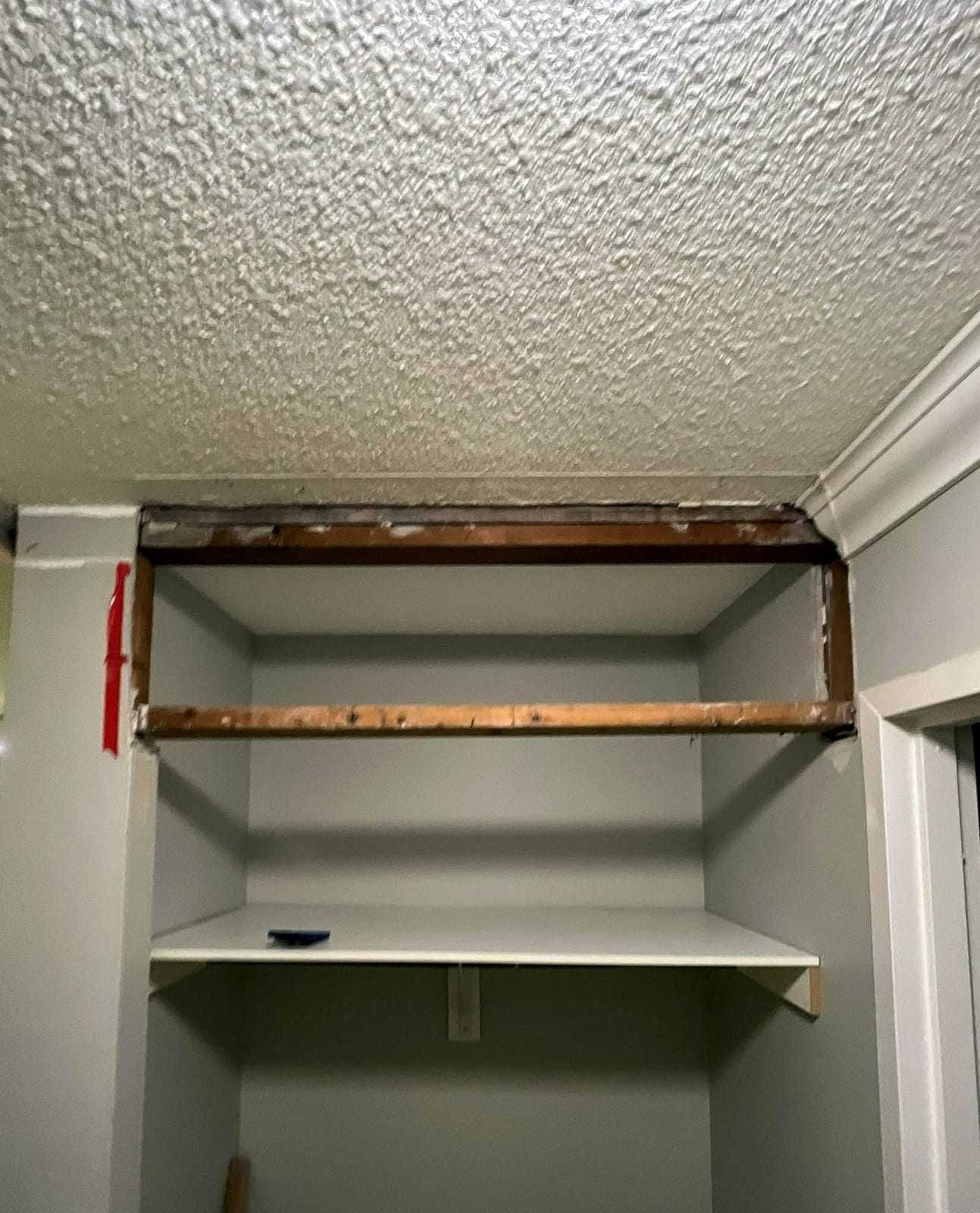
The same amount of water takes more work when it is hard to reach. A wet area above a finished basement ceiling, behind built-in cabinets or a tiled shower, or in a low crawl space needs more steps to open, dry and close again than water on an open floor. Ceilings often hide ductwork, wiring and gas lines that have to be worked around, and rooms full of furniture and stored belongings have to be emptied or protected before the work starts.
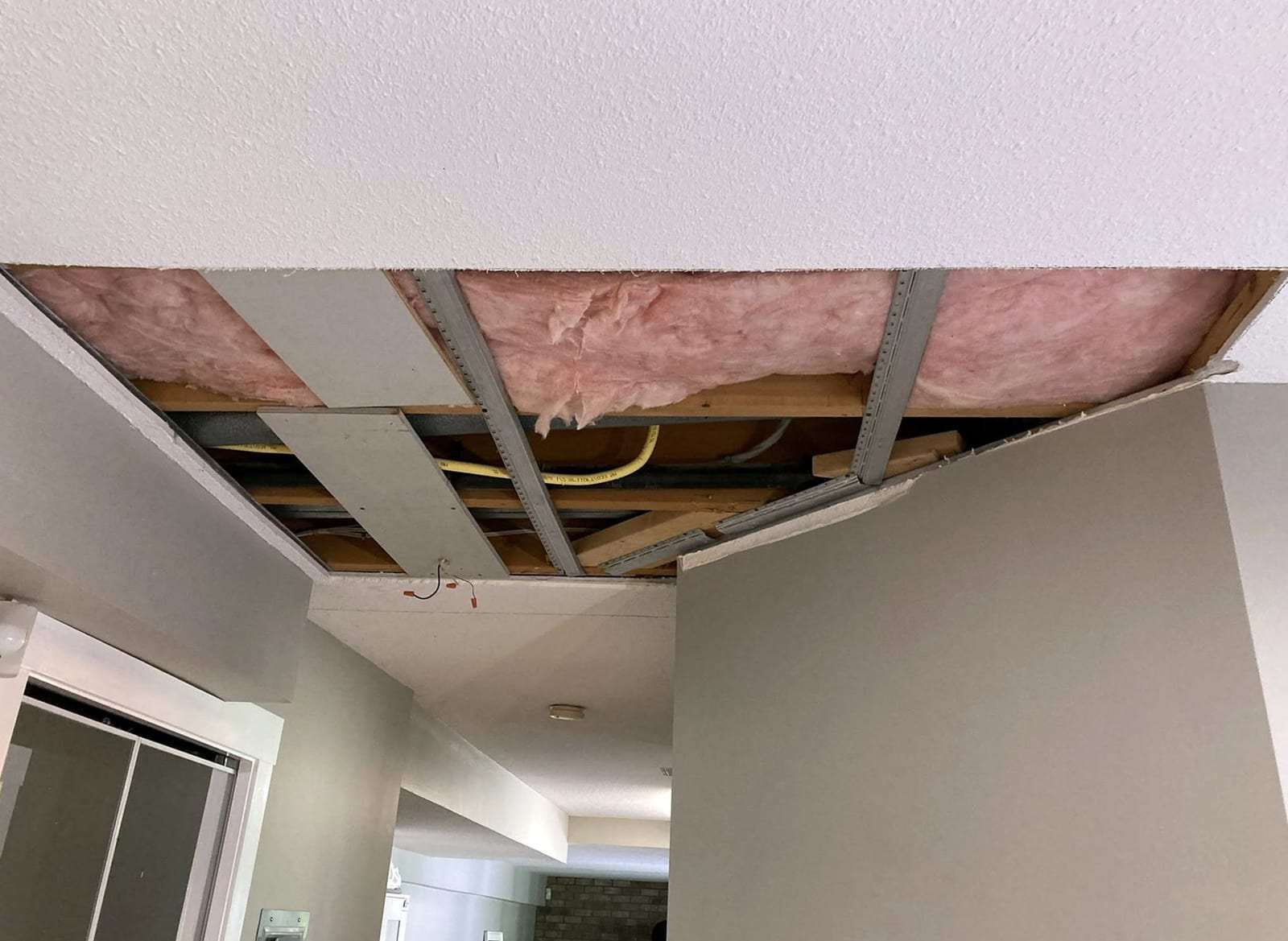
Rebuilding is the last factor. In the replacement work, each layer that came out has to go back: insulation, drywall, tape and finish, primer and paint, trim, flooring and cabinets. Matching adds work of its own. Paint is usually carried to the nearest corner so that a wall reads as one color, a wall texture is reproduced by hand, and flooring that runs through several rooms may need more than the damaged boards replaced to look uniform.
Why Similar-Looking Jobs Can Differ in Scope
Why can two stains of the same size need very different work?
A stain shows where water reached the surface, not where it went. One leak may have run straight down and stayed in a small patch; another may have spread along a joist, soaked the insulation in a wall cavity and reached the room below. The visible stain is often the smallest part of the damage.
Why can two small kitchen fires leave very different cleanups?
What burned decides the residue. Burned food leaves a thin, sticky film that is hard to see but carries a strong odor, while burning plastics and other synthetics leave heavy, oily black soot that smears when touched. Whether the heating or cooling system ran during or after the fire matters as well, because a running system carries smoke and soot through the ducts into rooms far from the kitchen.
Why does the scope sometimes grow after the work begins?
Some damage can only be seen once a material is opened: water that ran along a joist, mold on the back of drywall, a rotted subfloor under vinyl. When opening a wall or a floor shows more damage than expected, the scope grows to include it, because closing up wet or moldy material only hides the problem behind new paint. In the trade, a change like that is normally discussed with the owner before the added work goes ahead.
Does waiting to see whether a wall dries on its own make the job smaller?
Rarely. A wall cavity has little air movement, so water inside it can stay for weeks while the surface looks dry. In that time the drywall softens, the insulation stays wet against the framing and mold can start, which turns a drying job into a removal job. Early attention is the most reliable way to keep a job small.
Scoping the Job Before the Work Starts
Corryville Restoration walks through the damage with the homeowner before writing an estimate, and explains which repairs are urgent and which can wait. A few details gathered beforehand make that first conversation more precise.
Details That Help When You Request Service
- Where the water, smoke or odor seems to come from, and whether the source has been stopped
- When the damage happened or was first noticed, since drying depends on how long materials stayed wet
- Which rooms and floors are affected, and roughly how large each wet or stained area is
- The materials involved: carpet, hardwood, laminate, tile, drywall or plaster, and whether a basement is finished
- Anything already removed, cleaned or dried, and any fans or dehumidifiers already running
- The approximate age of the building, especially for an older house with plaster walls
- Wide photos of each affected room and close photos of the worst spots
An Estimate Based on the Damage Itself
The scope, and with it the cost, becomes clear once the damage has been seen and measured. Book an appointment to have the affected rooms looked at and the work set out in order.