
Water Damage Restoration in Cincinnati
What Water Damage Restoration Involves
Water damage restoration is one of the two main lines of work at Corryville Restoration, with fire and smoke damage cleanup the other. It covers water extraction, structural drying and, where moisture has sat too long, mold remediation, in single-family houses, brick rowhouses, rental buildings and small commercial spaces. The order of the work rarely changes: stop the source, extract the standing water, remove what cannot be saved, then dry the structure until it reads the same as dry materials of the same kind.
Clean, Gray and Contaminated Water
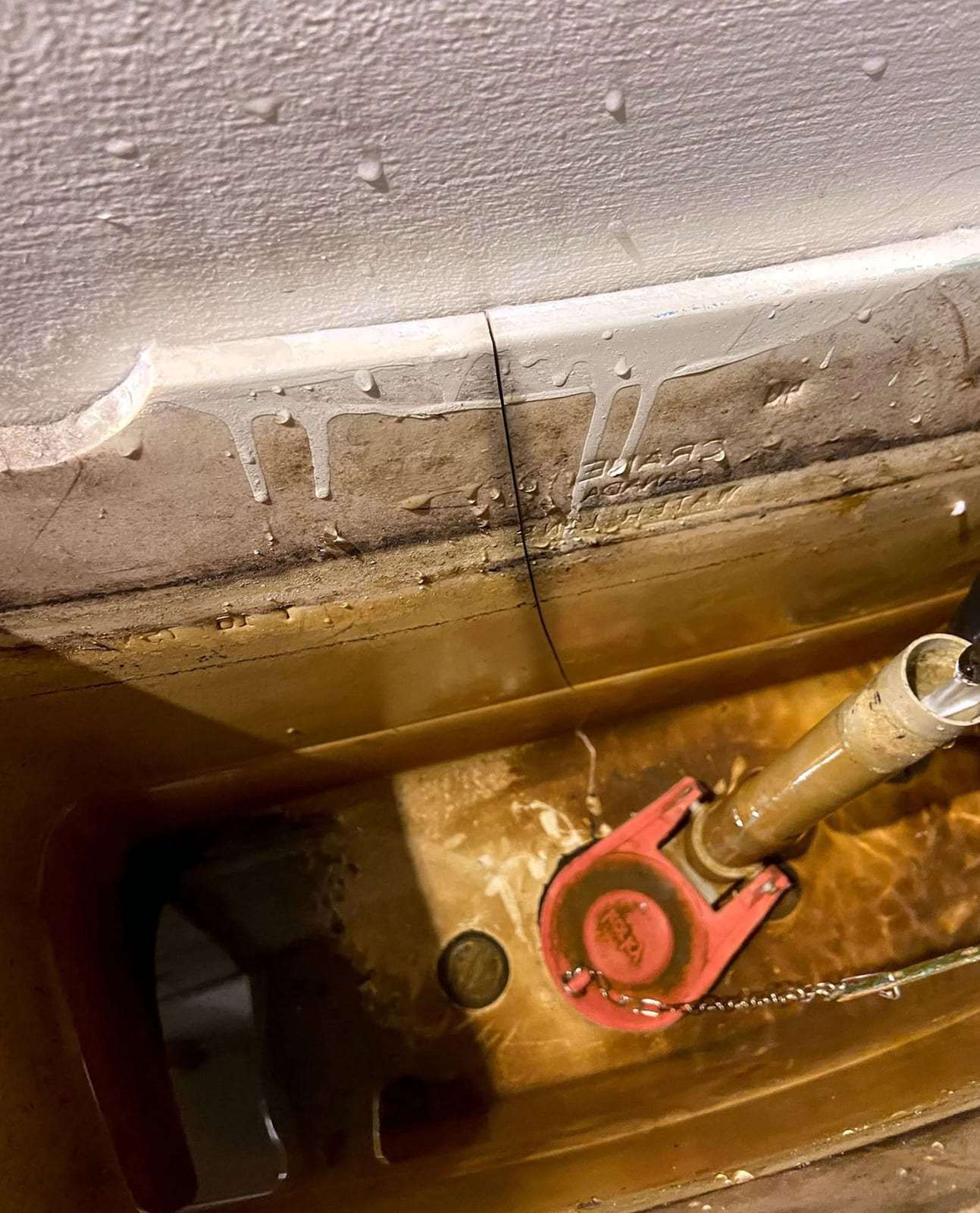
Restorers grade water by how contaminated it is, and the grade decides how much can be kept. Category 1 is clean water from a supply line, a water heater or a cracked toilet tank. Category 2, or gray water, carries enough contamination to cause illness: washing machine discharge, for example, or a toilet overflow without waste. Category 3 is grossly contaminated: sewage, a toilet overflow with waste, and floodwater from outside. A clean leak left for a day or two picks up bacteria from the materials it soaks and is then treated as Category 2.
When clean water is dealt with early, carpet and framing can often be dried in place. After Category 3 water, the porous materials it touched are removed and the hard surfaces disinfected.
| Water source | Typical situation | Work involved |
|---|---|---|
| Burst pipe | A supply line splits in a hard freeze, often inside an exterior wall or a crawl space, and runs until the water is shut off. | Extraction, removal of soaked drywall and insulation, and drying of the framing, the subfloor and the ceiling below. |
| Appliance leak | A washing machine hose, dishwasher connection, ice-maker line or water heater leaks slowly behind the unit, or fails at once. | Moisture mapping under cabinets and flooring, removal of swollen toe kicks or flooring that traps water, and drying of the subfloor. |
| Basement flooding | Heavy rain overwhelms the drainage, a sump pump fails, or groundwater seeps through the foundation walls onto the slab. | Pumping and extraction, removal of wet carpet and lower drywall, cleaning of the slab, and dehumidifying the whole basement. |
| Sewage backup | A floor drain or basement toilet backs up from a blocked or overloaded sewer line, often during a heavy storm. | Category 3 work: the area is closed off, porous materials are removed, and hard surfaces are cleaned and disinfected. |
| Roof leak | Rain enters through damaged shingles or flashing and soaks the attic insulation before it stains the ceiling. | Removal of wet insulation and sagging ceiling drywall, and drying of the joists and the room below once the roof is closed. |
In older parts of Cincinnati, where storm water and sewage often share the same pipes, a heavy storm can push sewage up through a basement floor drain. A basement that needed only drying then becomes a Category 3 job, with more material removed and every hard surface disinfected.
While water is still coming in or standing on the floor, a few steps limit the damage. When it cannot be stopped, or it has reached the electrical system, the emergency steps come first.
What to Do While Water Is Still Present
- Shut off the water at the valve of the leaking fixture or appliance, or at the main.
- Keep out of rooms where water has reached outlets, cords or plugged-in appliances, and switch off circuits only at a dry panel that can be reached without crossing water.
- Treat sewage, toilet waste and outside floodwater as contaminated: keep children and pets away, and wear rubber gloves and boots.
- Stay out from under a ceiling that sags or bulges, and leave its light switched off.
- Lift rugs, boxes and small furniture off the wet floor, and photograph the damage before anything is thrown away.
- Do not use a household vacuum on water, and do not turn up the heat in a closed house: warm, damp air carries the moisture into dry rooms.
Extraction, Removal of Wet Materials and Structural Drying
The work moves through four stages that overlap in practice, and each one depends on the stage before it.
Mapping the Wet Area
Before anything is cut or carried out, the wet area is mapped. Corryville Restoration takes moisture readings on every wet wall or floor well past the edge of the visible stain, since water usually travels farther than the damage shows: under baseboards, along the bottom of the wall, beneath flooring and into the ceiling below. Removal and drying that stop at the edge of the stain leave the rest of the wet area to feed mold.
Extraction
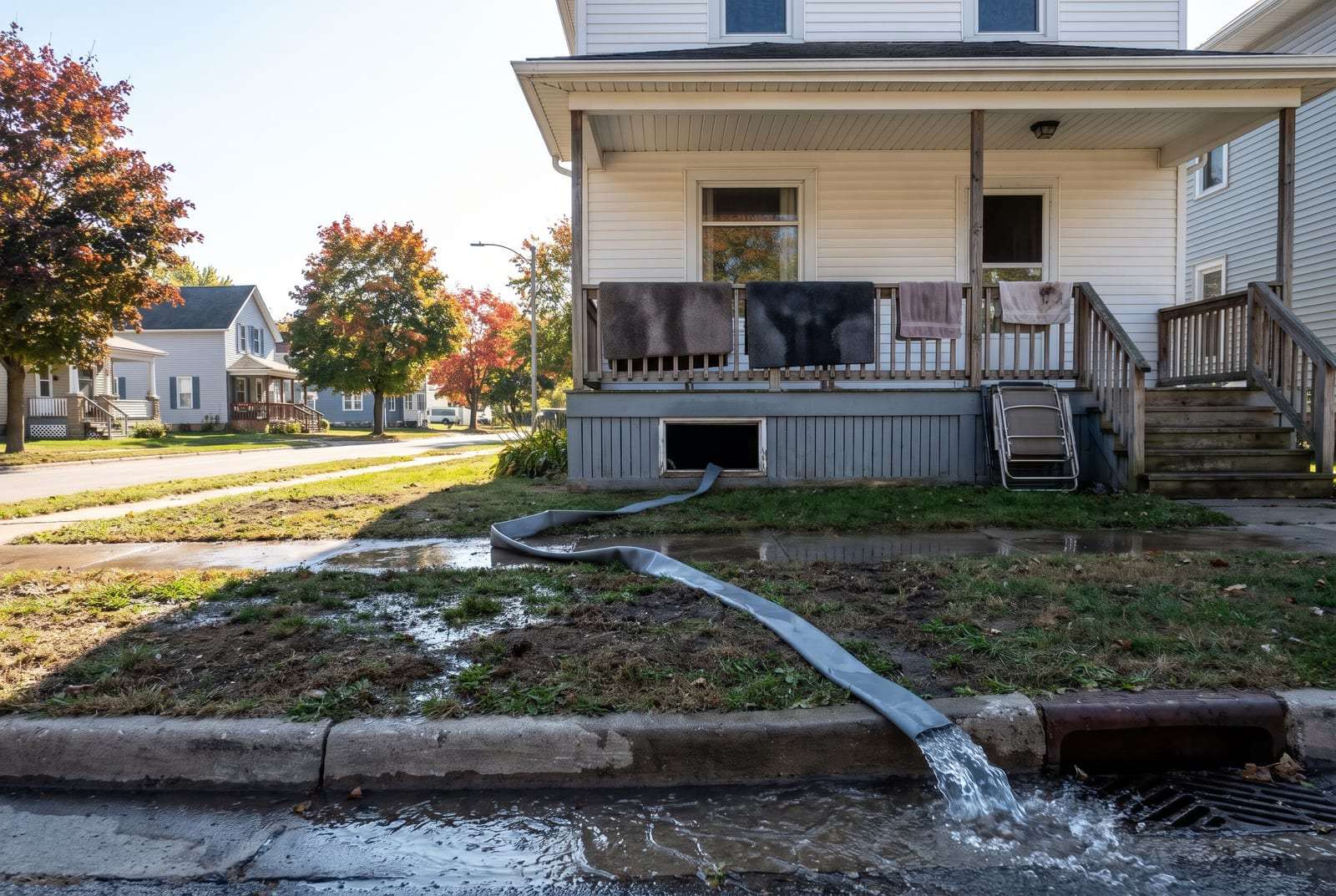
Extraction removes the water that is still liquid, with submersible pumps for deep water and extraction wands for carpet and pad. An hour of extraction can remove more water than days of evaporation, which is why it comes first. In a flooded basement, the discharge hose usually runs out through a window to a drain outside.
Removing What Cannot Be Saved
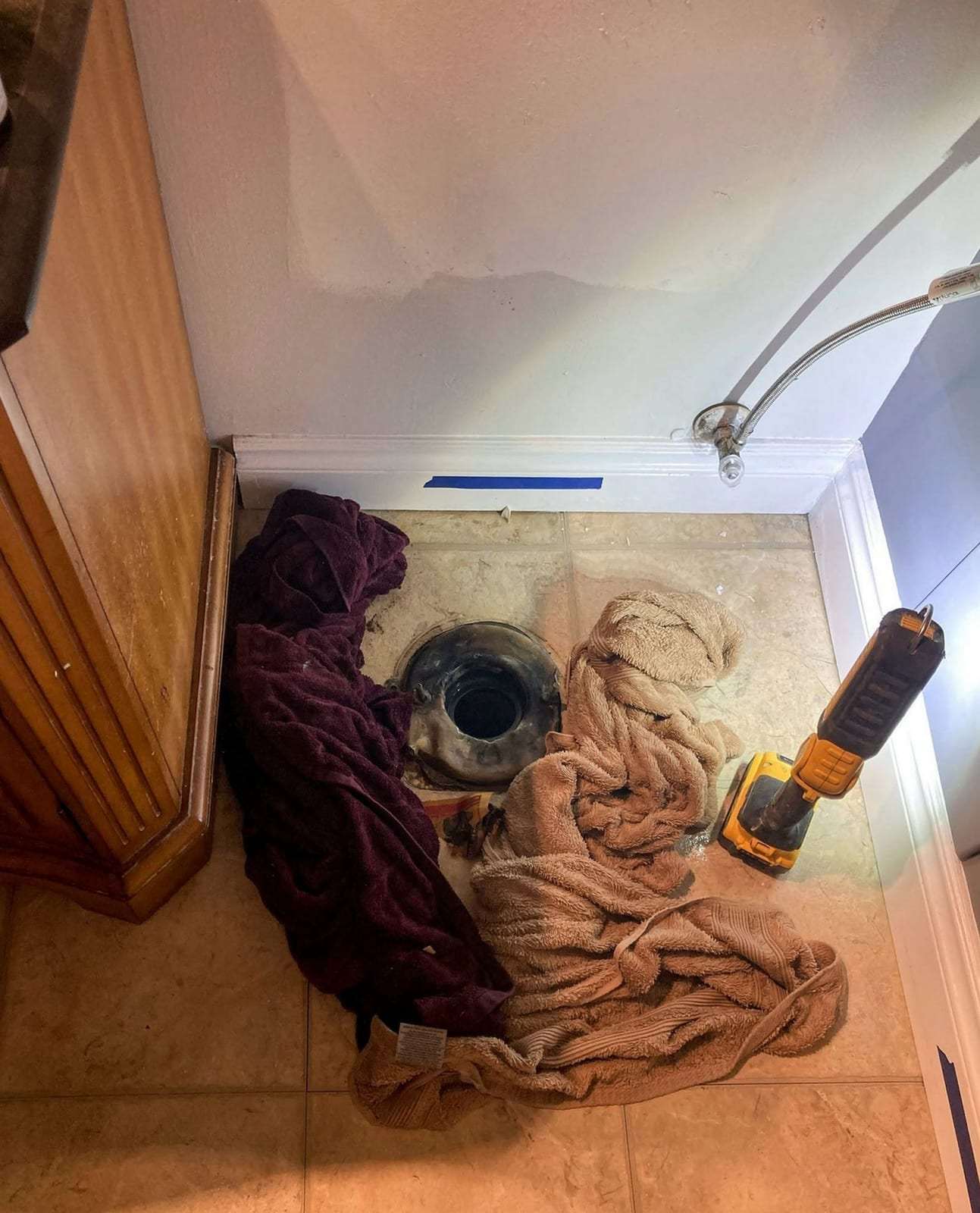
Some materials cannot be dried back to sound condition, or are contaminated beyond cleaning: carpet pad after a soak, wet insulation that slumps inside the wall, swollen particleboard and MDF, and drywall touched by Category 3 water. In a bathroom, the toilet is sometimes pulled so the floor beneath it can be checked, and the line left on the drywall shows how far the water wicked up the wall.
Drywall is usually cut in a straight line just over the highest wet reading, a flood cut, so the cavity behind it can dry and be inspected. Cutting too little leaves wet material inside the wall; cutting more than the readings justify only enlarges the rebuild.
Structural Drying
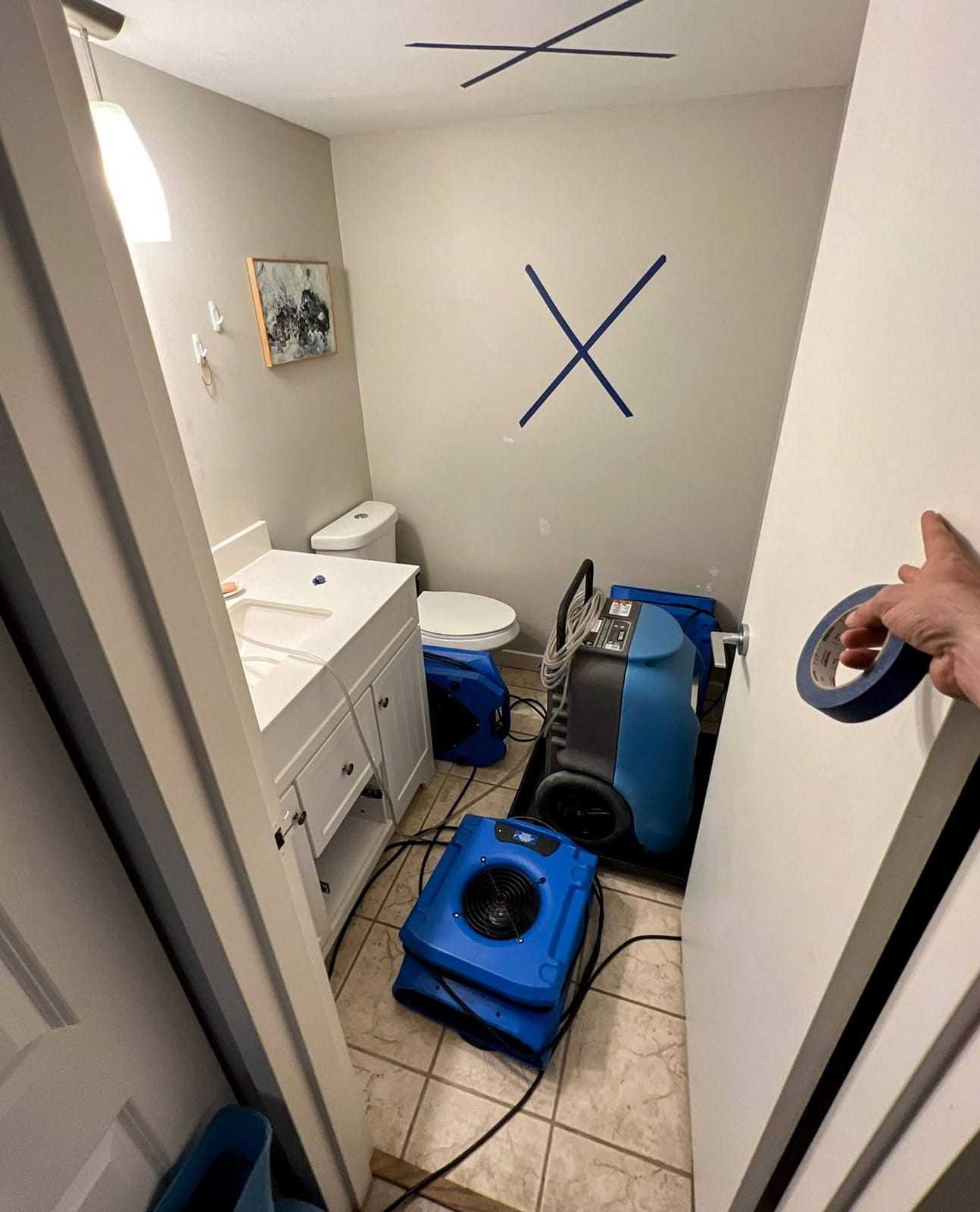
Structural drying takes the water out of framing, subfloor, plaster and concrete. Air movers speed evaporation, and dehumidifiers pull the moisture out of the air, running continuously in a closed room; air blown through small holes, or drying mats laid on the floor, reach wall cavities and hardwood. On a muggy Cincinnati summer day, the outdoor air holds more moisture than the air the dehumidifiers leave behind, so open windows usually slow the drying rather than help it.
Where moisture has sat long enough for mold to grow, the area is contained and the moldy porous materials are removed before drying. Once the structure reads dry, the repair work puts back what was taken out, from insulation and drywall to trim and paint.
Drying Decisions and the Risk of Mold
Which materials can be dried in place, and which must be removed?
It depends on the category of the water, how long the materials stayed wet and how they are made. Framing lumber, plywood subfloor that has not delaminated, concrete, brick, tile and most plaster can usually be dried in place. Solid hardwood often can too, although it may need sanding and refinishing once it is dry.
Carpet pad, wet insulation, swollen particleboard and most laminate flooring are usually removed, as is anything porous that sewage or outside floodwater reached. Drywall soaked by clean water can sometimes be dried if the work starts early; drywall that has sagged, crumbled or begun to grow mold is cut out.
Why does drying matter so much for mold?
Mold spores are present in every building. To grow, they need moisture, a food source and time, and a wet building supplies all three: drywall paper, wood and household dust are all food. In a warm, damp room, it can start growing within the first couple of days.
A surface that feels dry may not be. Drywall can feel dry on the room side while its back and the framing behind it stay wet, and that hidden side is where mold usually starts. Drying to measured readings, rather than to the touch, keeps mold from following the water. Where a musty smell suggests it already has, a mold inspection shows how far it has spread.
How long does structural drying usually take?
Usually several days, and longer for hardwood, plaster or a concrete slab than for drywall and framing that were wet only briefly. The equipment needs to stay until the readings say the materials are dry; switching it off when the surfaces feel dry is one of the usual ways a drying job fails.
An Appointment for Water Damage
For water damage that has stopped spreading, book an appointment and describe the source, the rooms affected and when the water was first noticed. A stain that keeps growing, or a floor that has begun to cup, is worth having looked at before the damage underneath gets larger.