
Repairs After Water, Fire and Storm Damage
Repairs That Follow Drying and Cleanup
Repairs are the last stage of a restoration job and the part that returns a room to use. They follow the emergency work, the drying and the cleaning: an opened wall is closed only once the framing inside it is dry, and a sooty room is repainted only once the residue is cleaned off and sealed. The work covers drywall and ceilings, subfloors and flooring, walls and trim, interior damage from roof leaks, and repainting over smoke and water stains.
Repairs after damage differ from ordinary remodeling in one respect: the new work has to meet the old. A patch has to match the wall around it in thickness, texture and sheen, and new floorboards have to match the old ones in species, width and color.
| Repair job | Typical cause of damage | Part of the building affected |
|---|---|---|
| Drywall and ceiling repair | Pipe, toilet and appliance leaks, flood cuts made during drying, and heat or soot from a fire. | Interior walls and ceilings, closets, and the ceiling under a bathroom or kitchen. |
| Subfloor and flooring repair | Slow leaks under toilets, dishwashers and washing machines, standing water, and water from firefighting. | Plywood or OSB subfloor, hardwood, laminate, vinyl and tile, and in severe cases the joists below. |
| Wall and trim repair | Water wicking up from a wet floor, swollen MDF trim, and storm debris driven through a window. | Baseboards, door and window casings, and the bottom of the wall with the plate it sits on. |
| Interior damage from roof leaks | Storm-damaged shingles or flashing, ice dams, and wind-driven rain around chimneys and skylights. | Attic insulation, top-floor ceilings, the tops of walls, light fixtures and the framing under the leak. |
| Repainting after smoke or water staining | Water stains that bleed through paint, soot film and smoke odor, and staining left after mold cleanup. | Ceilings, walls, trim and doors across the affected rooms, often well beyond the damage itself. |
Older houses add a step. Where the walls are plaster on wood lath, as in many of Cincinnati’s older homes, a repair has to be built up to the plaster’s thickness and finished to its harder, smoother surface, or the patch shows. Where a leak has loosened plaster from its lath across a large area, replacing that section with drywall is often the sounder repair.
Cleaning restores surfaces that are still sound. When the material itself has changed, by swelling, softening, delaminating or absorbing a stain or an odor, cleaning alone will not bring it back.
Signs the Damage Needs Repair, Not Just Cleaning
- Drywall that feels soft, crumbles at the bottom edge or bulges between the studs.
- A ceiling that sags, shows a ring that keeps spreading, or has tape lifting along its seams.
- Baseboards and door casings that have swollen, split or pulled away from the wall.
- Hardwood that cups or buckles, laminate with swollen edges, or a floor that gives underfoot.
- Tiles that sound hollow when tapped, or grout that cracks along a line.
- Paint that bubbles or peels, or a stain that shows through fresh coats.
- Soot that leaves a shadow after cleaning, or a smoke smell that returns from walls and closets.
- Doors that stick or no longer latch since the leak, or nail heads pushing through the drywall.
Drywall, Flooring, Trim and Paint Work
Each repair starts by confirming that the materials behind it are dry and clean. A wall closed over damp framing traps the moisture that the drying removed from everything else, and it returns as mold, a musty smell or popped fasteners.
Repairs usually go on while people live or work around them. Corryville Restoration sweeps up and hauls out the debris each day, so the rooms stay usable while the work goes on.
Drywall and Ceilings
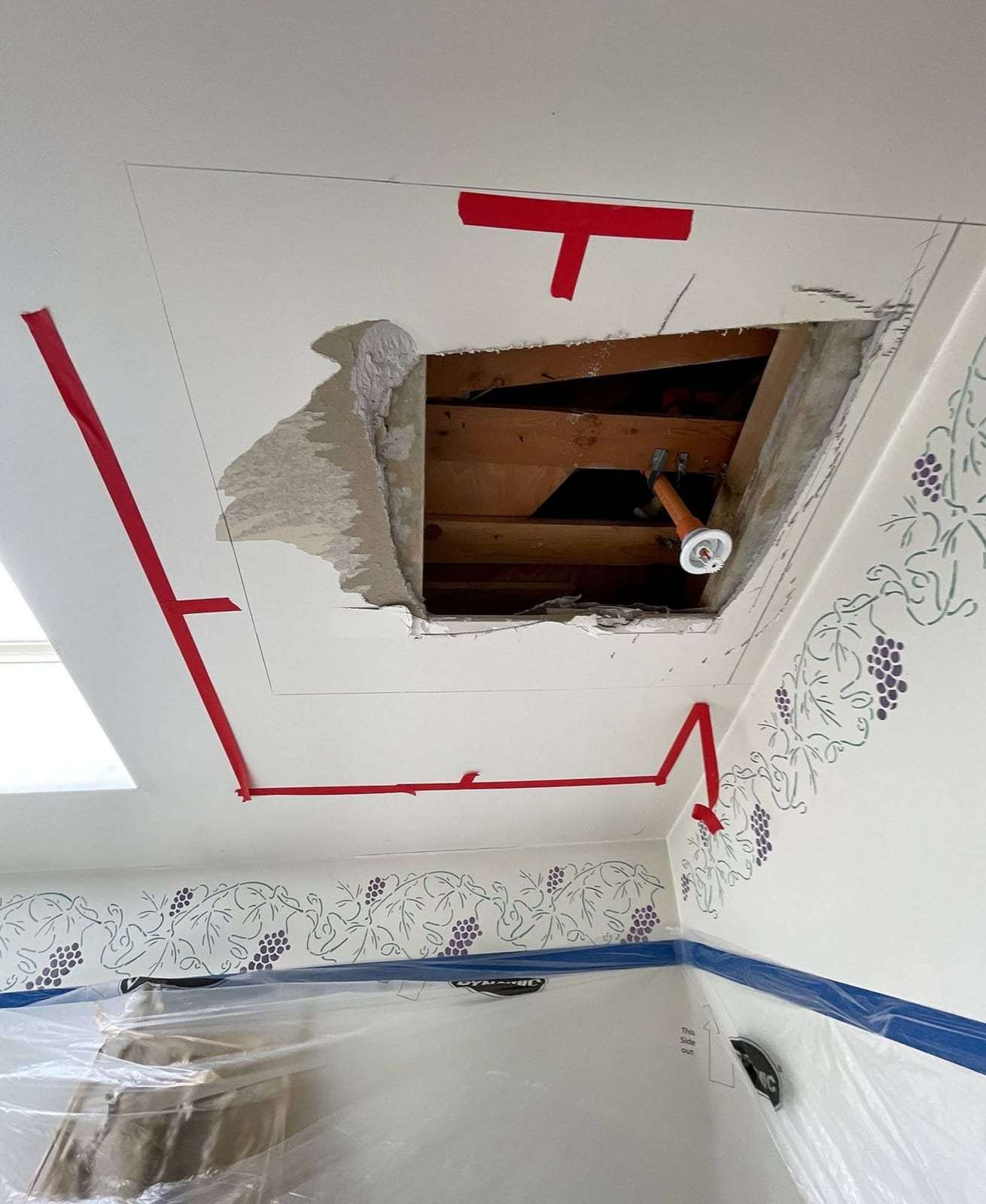
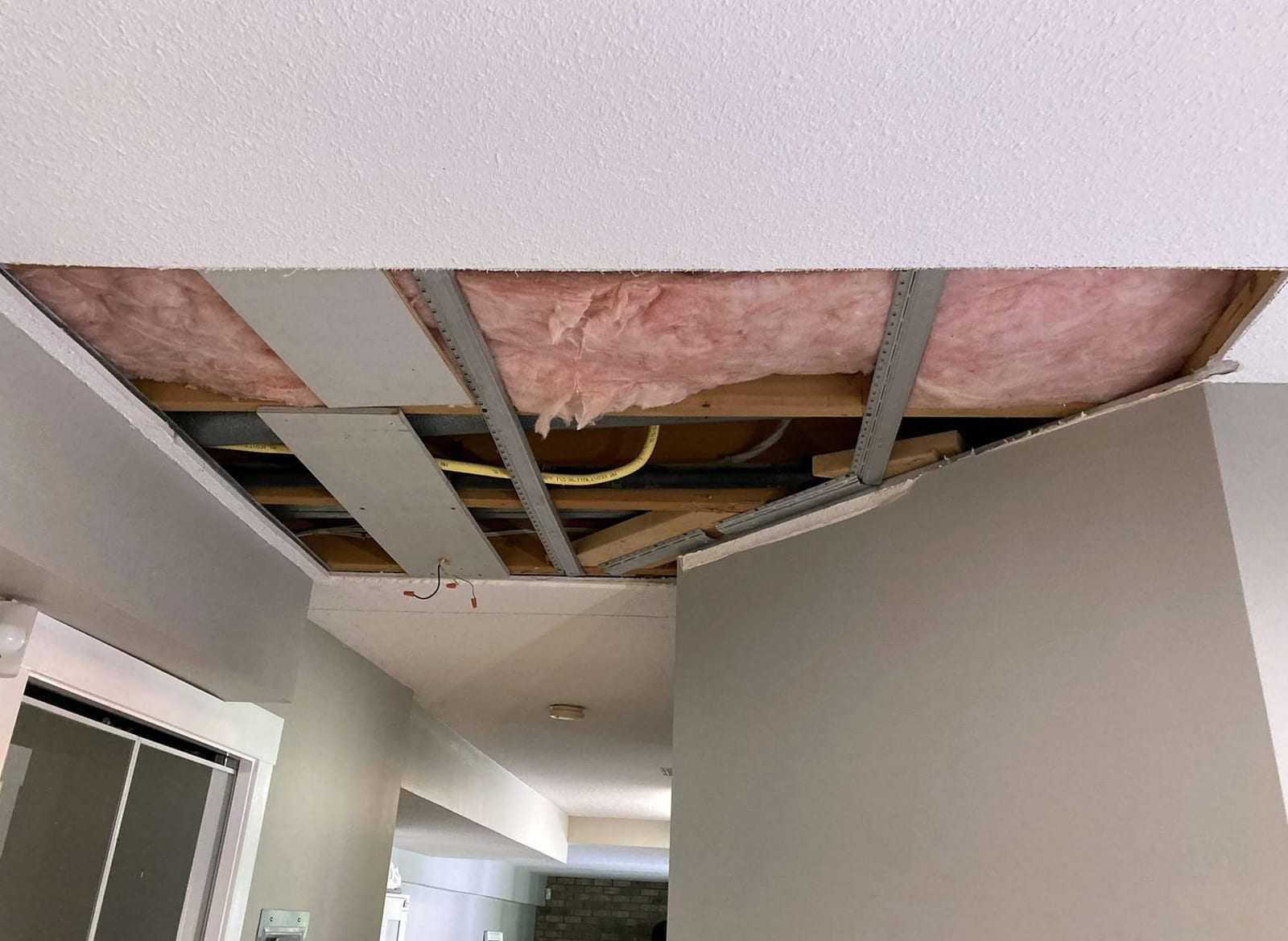
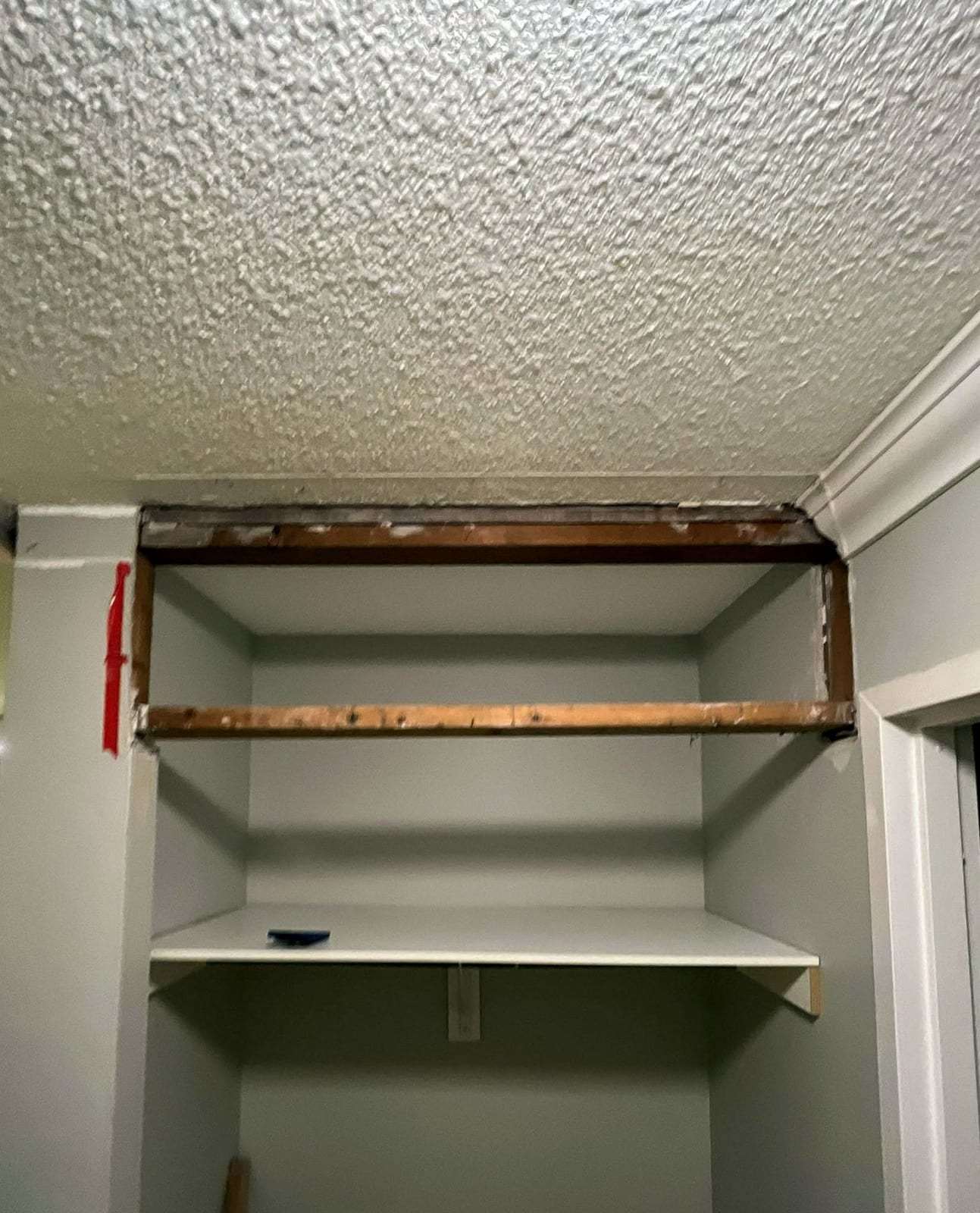
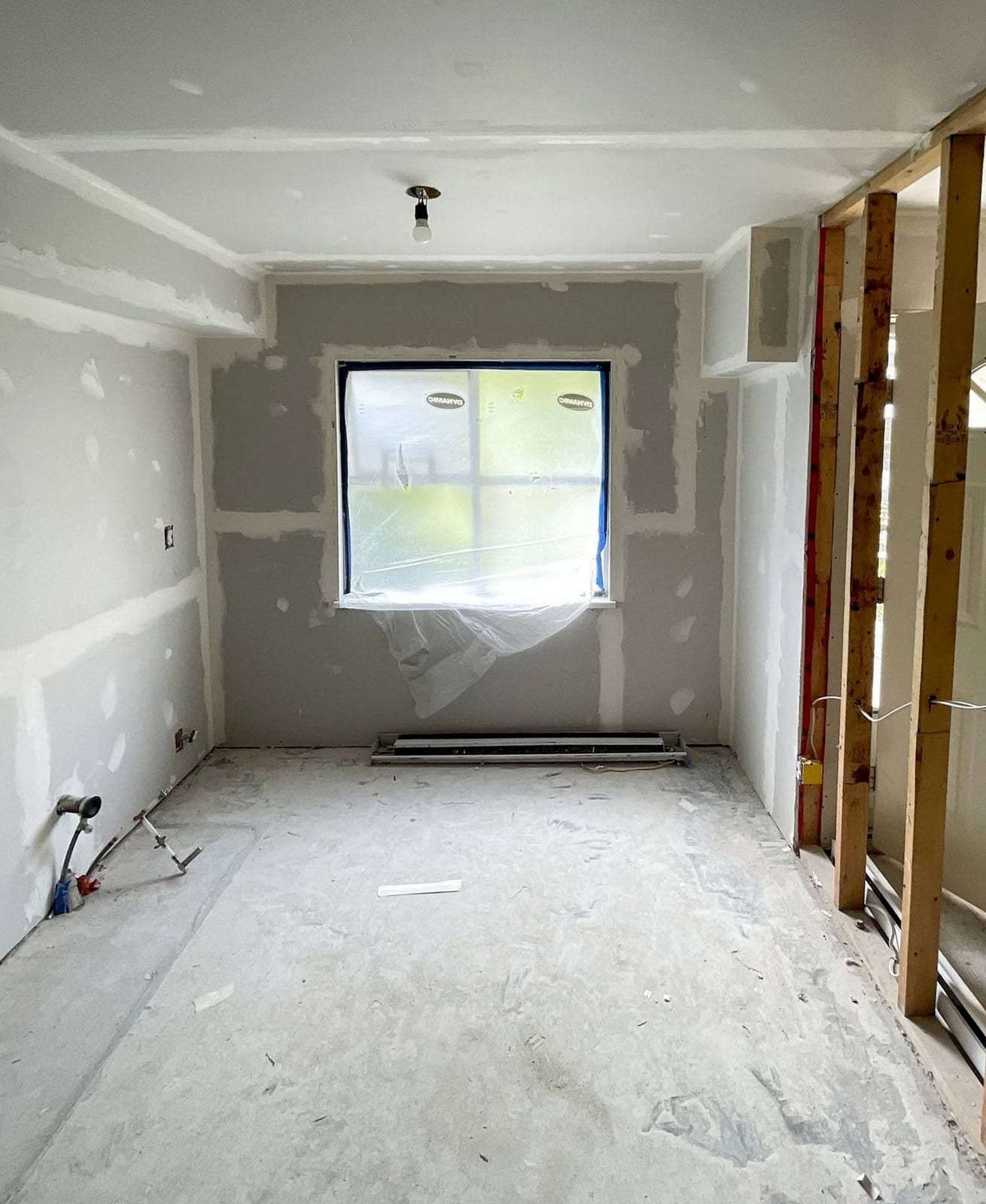
A leak above a ceiling is usually opened in a neat rectangle, large enough to reach the pipe and dry the joists. Closing it means a drywall patch fastened to backing, joints taped and covered with several coats of compound, then sanded and textured to match. A ceiling that sagged under water, or walls cut back to the studs during drying, are rehung with new sheets, taped and finished.
Texture is often the hardest part to match: orange peel, knockdown and the sprayed textures of older ceilings each need their own technique, and a flat patch beside a textured surface stays visible however well it is painted. Older textured ceilings are tested for asbestos before they are cut or scraped.
Subfloors and Flooring
Damaged subfloor panels are cut out back to the center of the joists and replaced, and the joists are checked before the new panels go down. Flooring goes back last: hardwood is woven in and refinished, laminate and vinyl are replaced to the nearest natural break such as a doorway, and tile is reset over the repaired subfloor.
Walls and Trim
Baseboards and casings take the first hit when water spreads across a floor. Solid wood trim can often be removed, dried and reinstalled, while MDF trim swells and crumbles and is replaced. New trim is matched to the old profile, which in older houses may take a built-up combination of stock moldings, then caulked, filled and painted with the wall.
Inside the Building After a Roof Leak
A roof leak shows up first in the attic and last on the ceiling. Wet insulation is replaced, stained or sagging ceiling sections are cut out and rehung, and the tops of walls and the light fixtures are checked for water that ran along the joists before it dripped. The interior repair waits until the roof itself is fixed, or the next storm undoes it.
Repainting Over Stains and Smoke
Water stains and soot both bleed through ordinary latex paint. They are sealed first with a stain-blocking primer, shellac-based or oil-based for the worst stains and for smoke odor, and then painted, often across the whole room so that the old and new paint match.
Patching a Damaged Wall or Floor Instead of Replacing It
When can a damaged wall be patched instead of replaced?
When the damage is confined and the structure behind it is sound. A section cut out below a flood line, a square opened around a leak or a stretch of wall stained by soot can be repaired in place, provided the framing is dry, the cavity is clean and no mold has spread inside the wall.
Replacing the whole wall makes more sense when the damage runs across most of it, when sewage reached it, when old plaster has come loose from its lath over a wide area, or when the patch would be larger than the wall it is meant to save. The job then becomes a replacement rather than a repair.
Can part of a tile floor be repaired without redoing the whole room?
Often, if the subfloor beneath it is sound or has been repaired, and if matching tile can be found. Cracked or loose tiles are cut out and reset, and the new grout is matched to the old joints. When the tile is no longer made and no spare boxes were kept, or the subfloor damage runs under most of the floor, retiling the room usually gives the better result.
Can a water-stained ceiling simply be painted?
Only if the leak has been fixed and the ceiling is dry and sound, with no sag and no soft spots. The stain is sealed with a stain-blocking primer first, or it bleeds back through the paint, and the whole ceiling is then painted so the repair does not show. A ceiling that sags or crumbles is cut out and replaced instead.
Is a subfloor that got wet always replaced?
No. Plywood that dried within a few days and stayed flat and firm usually remains in place. Panels that have delaminated, softened or swollen at the edges, or that sewage soaked, are cut out back to the joists and replaced, and OSB is more likely to need it than plywood.
When a Repair Should Not Wait
A sagging ceiling or a floor that gives underfoot should be seen soon, before it fails; stains and cosmetic marks can usually wait until the drying and cleaning are done. Book an appointment to have the damaged walls, ceilings or floors looked at, and mention whether the area has already been dried or cleaned.